Sickle cell anemia
Sickle cell anemia is an inherited disease in which the body does not have enough healthy red blood cells to carry oxygen throughout the body.
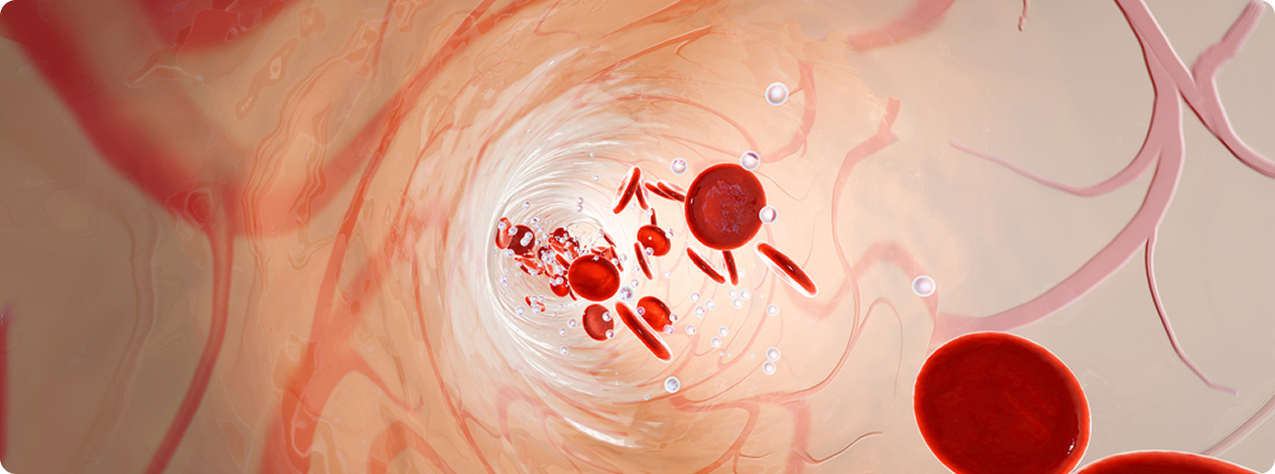
Normally, a red blood cell is elastic and round, allowing it to move easily through the blood vessels. In sickle cell anemia, the red blood cell becomes rigid and sticky, taking on a crescent shape. This irregularly shaped cell easily gets stuck in a blood vessel, causing blood flow to slow down, throttling, and oxygen transport dysfunction.
Sickle cell anemia cannot be cured However, treatment can provide relief from pain and other associated problems
Sickle cell anemia is caused by a gene mutation This gene normally produces hemoglobin, the red, iron-rich compound that gives blood its color. Red blood cells carry oxygen throughout the body by means of hemoglobin In sickle cell anemia, the abnormal hemoglobin is sticky and causes the cells to become rigid, sticky, and deformed.
The gene for sickle cell anemia is passed from generation to generation, through autosomal-recessive inheritance. This means that the disease will only develop if both the mother and father have the defective gene, which they pass on to their child.
If a child inherits the defective gene from only one parent, the child will have only one allele for sickle cell disease. Thanks to one normal hemoglobin gene, the baby will have both normal cells and cells with the characteristic form of sickle cell anemia. Their blood contains deformed cells, but symptoms usually do not appear Despite this, the child carries the disease, which means that the gene will be passed on to the next generation
During each pregnancy, two people with only one sickle cell gene have these probabilities:
- 25% chance – a healthy baby with normal hemoglobin
- 50% chance – a baby carrying the gene
- 25% chance – sickle cell anemia
Signs and symptoms of sickle cell anemia do not appear until the newborn is 4 months old Symptoms are:
- Anemia Sickle cells are easily damaged, the cell dies easily, and the content of red blood cells decreases A red blood cell normally lives for 120 days before being replaced by a new cell When the sickle cell dies in an average of 20 days, a deficiency of cells or anemia develops Without a sufficient amount of red cells, the oxygen exchange in the body is disturbed Therefore, anemia causes fatigue
- Episodes of pain Periodic episodes of pain, called crises, are the most common symptom of sickle cell anemia. Pain occurs when a sickle cell gets stuck in a small blood vessel in the chest, abdomen, or joint. Pain may also develop in the bone The pain varies in intensity and can last for several hours or weeks Some people experience only a few episodes, while others complain of several dozen cases a year If the crisis is severe, hospitalization is necessary
- Hand and foot syndrome Numbness of the hands and feet may be the first sign of sickle cell anemia Entrapment is caused by a sickle cell blocking blood flow from the hand or foot.
- Frequent infections Sickle cells damage the spleen, an infection-fighting organ This makes the patient prone to infections Doctors often prescribe vaccinations and antibiotics for babies and children to prevent potentially fatal infections.
- Stunted growth Red blood cells supply the body with oxygen and nutrients, which are necessary for growth A lack of healthy cells stunts growth in infants and children The turning point in adolescents is also delayed
- Vision problems Some people with sickle cell anemia experience vision problems The small blood vessels that supply the eyes become blocked by the cells This damages the retina - the layer necessary for the perception of images by the eye
When to consult a doctor
Despite the fact that sickle cell anemia is mainly diagnosed in newborns, symptoms may appear late in a child If you develop these symptoms, be sure to see your doctor:
- Unexplained episodes of severe pain, abdominal pain, chest pain, bone or joint pain
- Tingles in hands and feet
- Abdominal cramps, especially with pain
- Fever Sickle cell anemia often causes infections, so a fever may be the first sign
- pale skin and fingernails
- yellowing of the skin or whites of the eyes
- any signs or symptoms of stroke If you notice one-sided paralysis, paralysis or weakness in the face, arms or legs, as well as confusion, difficulty walking, sudden vision loss, unexplained numbness or headache, call 112 immediately